Insulation
Blog
Latest
While every building needs a solid foundation, not every foundation is the same. Homes across the United States may be built on cement slabs, over crawlspaces or have full basements running beneath the first floor.
As a responsible homeowner, you wouldn't think twice about insulating the attic and walls of your home. After all, adequate insulation makes your home more energy-efficient and, in the case of the attic, can help prevent ice dams from forming on your roof.
Unless you work in one of the building trades, you may only have a vague concept of home construction — first the foundation, then the walls and roof. Along the way, electricity, plumbing and drywall are added.
The performance of your roof involves more than durable roofing shingles. It takes a complete roofing system—including ventilation and insulation products—to maximize your roof’s performance and durability.
Whether it's a winter coat or your home, insulation plays a key role in temperature regulation. Think about wearing a light rain jacket in 20-degree weather versus a heavy down parka.
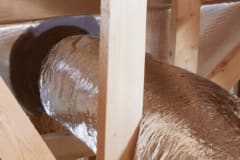
Your home is equipped with an air distribution system that helps create a comfortable living environment. Most systems use a network of air ducts, pipes, vents and registers to deliver heated or cooled air.